Showing posts with label science experiment. Show all posts

Thursday, March 21, 2013

Jupiter's Storm Experiment

What is the red spot that we see on Jupiter's surface? It is a powerful storm that seems to be never ending. We used some kitchen supplies to reenact this fenomena.

What we used:
bowl
milk
dishwashing soap
food coloring


 Pour milk into the bowl and drop couple drops of 2 different colors of food coloring into it, in the same spot.


Carefully using your hands swirl the milk around.


Then drop one drop of dishwashing liquid right in the middle of the color spot. See the cool reaction.


Swirl the bowl one more time and you have an image of the swirling storm on Jupiter!


The kids didn't stop there - they kept on playing with the food coloring and dishwashing soap effect - they loved that!


Tuesday, March 19, 2013

Saturn's rings experiment

Our next science experiment that involves the Planets was all about the Saturn's rings. We wanted to show why we see the ring as a whole ring and not just icy particles floating around. For that we need:

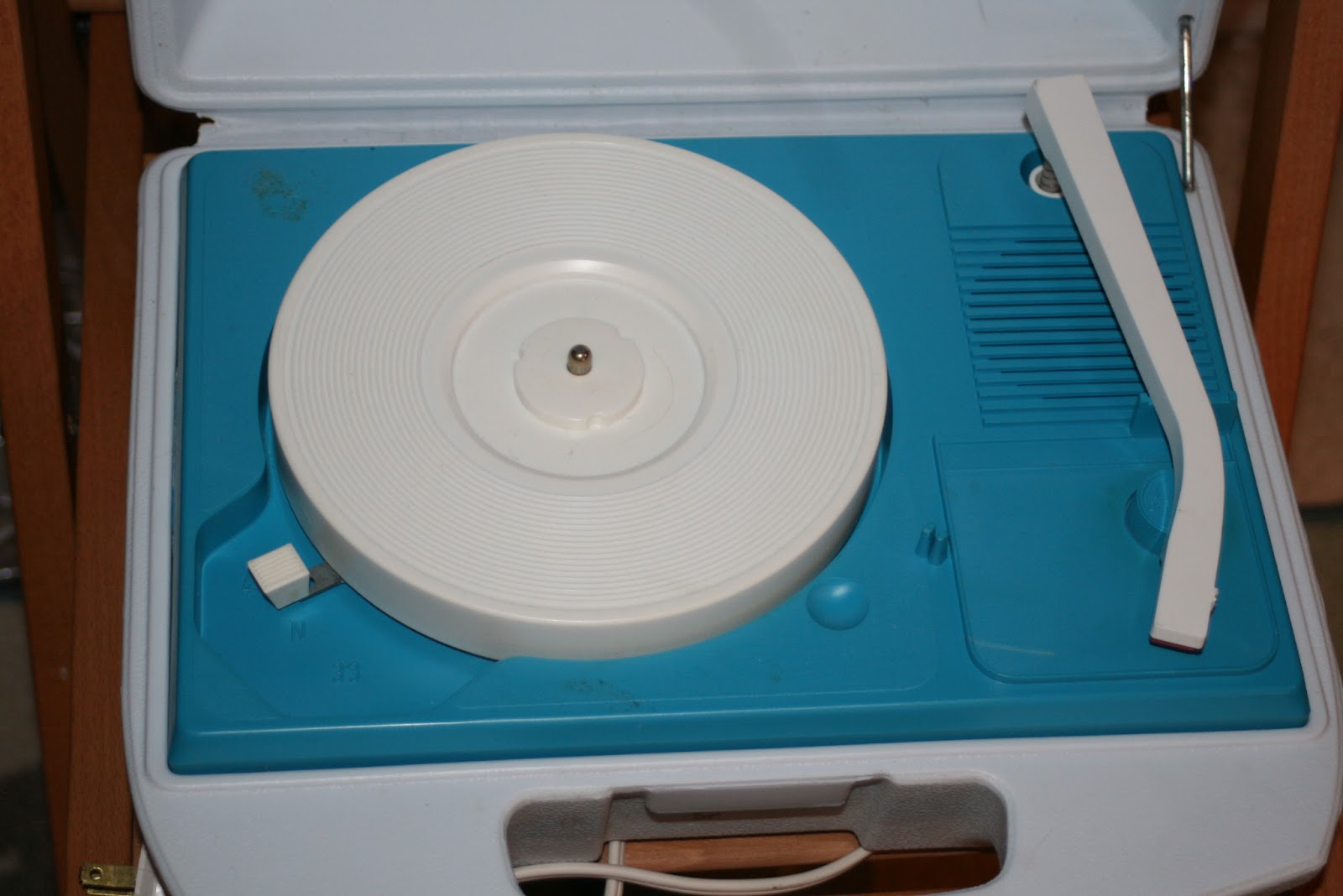
a record player
black construction paper
chalk
small particles such as - ice cream salt (which is perfect because it looks like ice crystals), sand, glitter, rice
glue
camera


Take the black paper and place it on top of the record player, making a hole through the middle part. Take the chalk, place it sideways, and carefully trace the circle shape of the record player. Older kids can do this themselves.


 Have the kids cut the circle out.


Give each kid a bowl with the small particles.


Have them glue it on the outer side of the circle. When they put the glue down, smudge it a bit with the finger to create bigger surface that the particles could stick to.


Let it dry.


When it dries, place it on the record player and talk about the particles being visible as individual particles when they are not rotating around the planet.


But what if you turn the record player on and make them rotate, just like the actual particles rotate around the Planet Saturn? Place your camera on the tripod and set your exposure on longer time.  This is one of our result pictures.


We tried several different variations of materials, thickness of the rings, and speed of the record player. See another picture, where the ring is thicker.


Result picture...


Have fun experimenting!


Saturday, January 12, 2013

How many drops of water will fit on a penny

In math we are learning about money and the value of money. I came across this experiment, which brought me back to my school years. Kids have to estimate how much water will fit on their penny. Perfect experiment that fits with science as well as with math.

Then they take their dropper, fill it up with water, and keep dropping the water slowly on the penny. Count the drops. Who was the closest? Do you have more kids? You can see who was the furthest or the next closest. Write it down and compare.